

Common Indian Food Habits That Are Quietly Damaging Your Teeth: Chai, Paan, Snacks and What to Do Instead
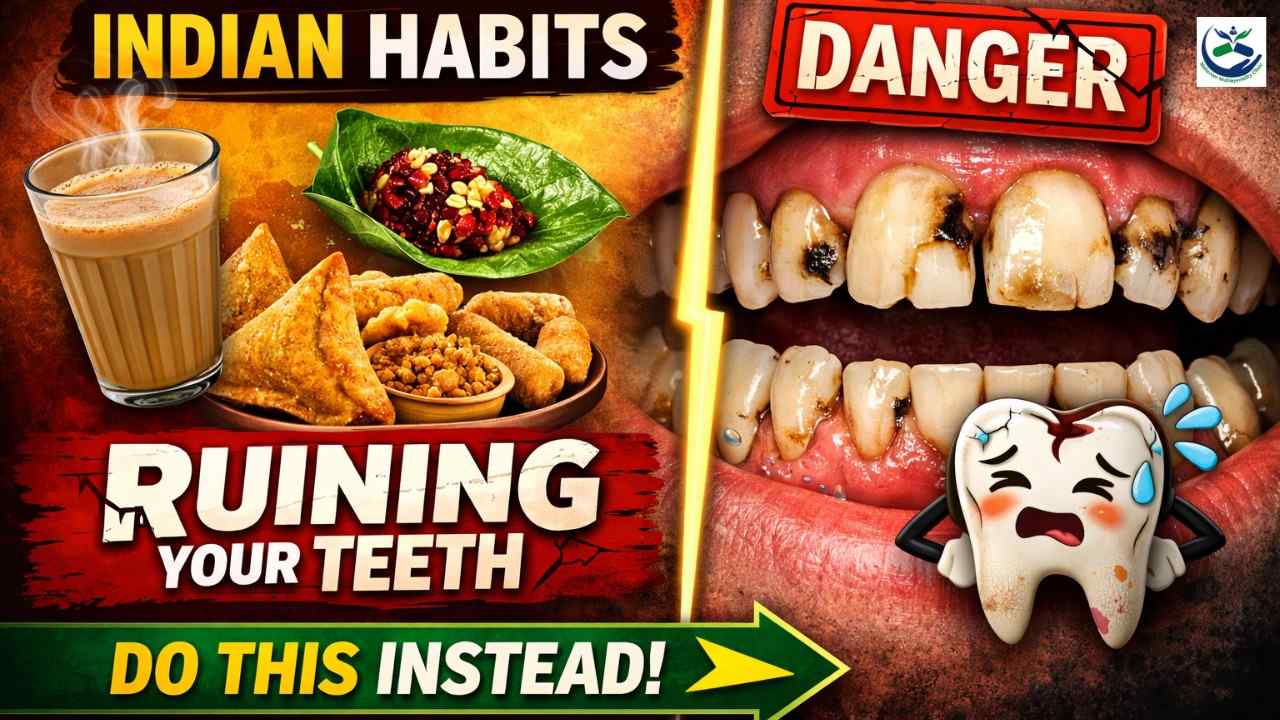
A Morning That Looks Familiar to Every Indian Family
Picture a typical morning in a Mumbai household. The alarm goes off at seven. Before anyone has brushed their teeth, the kettle is on the gas and the smell of ginger and cardamom is already drifting through the flat. By the time the first cup of chai is poured, at least two spoons of sugar have gone in per person. Sometimes three.
Breakfast is quick. Maybe some Marie biscuits dipped in that chai. Or a leftover piece of bread with jam. Then comes the commute, and somewhere between Andheri and the office, someone opens a packet of namkeen from the bag.
By eleven in the morning the office chai comes around again. This time with a couple of glucose biscuits on the side. Lunch is a proper meal, but it ends with a small piece of mithai someone brought from home. In the evening there is farsan or chakli with tea number three. And after dinner, because it is Wednesday and someone is celebrating something, there is gulab jamun.
Then, tired and satisfied, everyone falls asleep. Teeth unbrushed. Sugar sitting on enamel all night long.
This is not a story about a careless family. This is just a normal Indian day. And it is quietly, invisibly, doing real damage to everyone's teeth.
At Mahaveer Multispeciality Clinic, we see patients every week who are genuinely surprised when we point out that the cavity they have developed or the sensitivity they have been ignoring is directly connected to habits they never thought twice about. Not because they were irresponsible, but because nobody ever told them how these everyday things add up.
This blog is that conversation. It is written to explain, in honest and human terms, what chai, paan, snacks, and common Indian food routines are doing to your teeth, and what small but meaningful changes can make a real difference.
The Story of Chai and What Happens Inside Your Mouth With Every Sip
Let us start with chai because for most Indians it is not optional. It is the first thought in the morning and the last comfort at night. Nobody is saying you should give it up. But you should know exactly what is happening inside your mouth while you drink it.
When you take a sip of hot, sweet chai, three things happen at once. The sugar dissolves into your saliva and feeds the bacteria that live on the surface of your teeth. Those bacteria release acids as a byproduct, and those acids begin breaking down the hard outer shell of your teeth, which is called enamel. At the same time, tea itself is naturally acidic. Its pH is low enough to contribute to enamel erosion on its own, even before the sugar gets involved. And finally, tea contains tannins, which are compounds that bind to the surface of teeth and create the yellowish brown staining that you might have noticed getting worse over the years.
Now consider how most of us drink chai. We do not drink it in one go. We sip it slowly over twenty or thirty minutes, sometimes longer. That slow sipping means the sugar and acid are being refreshed on the tooth surface again and again rather than being washed away. Each sip restarts the acid attack. By the time you have finished one cup, your teeth may have been under acid attack for close to an hour.
Then, if you are a two or three cup a day person, you are giving your teeth almost no time to recover between sessions. Saliva is what neutralises those acids naturally, but saliva needs time to do its job. When chai is happening throughout the day, that recovery window barely exists.
The result, over months and years, is predictable. Enamel thins. Teeth become sensitive to cold, sweet, and hot things. Small cavities form, often in the places where sugar sits longest, like between teeth and in the back molars. The staining deepens and becomes harder to remove with regular brushing. And by the time you notice something feels wrong, the damage has often been building quietly for a long time.
What to Do Instead
You do not have to give up chai. But small adjustments can protect your teeth significantly. Try drinking it in one sitting rather than sipping it across an hour. After your chai, drink a glass of plain water immediately. This washes the sugar and acid away from the tooth surface before bacteria can fully use them. Try reducing the sugar in your chai by half a spoon every two weeks. Gradual reduction is easier to maintain than a sudden cut. Over two months you will be at half the sugar and you will barely notice the difference in taste.
And if the staining has already built up, a professional dental cleaning can remove it safely and restore the natural shade of your teeth without any harm to the enamel.
The Paan Chapter: A Habit That Feels Cultural but Carries Real Consequences
Paan holds a particular place in Indian social life. It is offered at weddings. It is the way some families end a meal. It is the small ritual that older relatives swear by for digestion. And for many people in certain parts of the country, paan masala or gutka is simply a daily habit that has been there for so long it barely registers as a choice anymore.
There are different kinds of paan. Plain betel leaf with lime paste and areca nut, sweet paan loaded with gulkand and mouth freshener, and tobacco paan or paan masala which contains both areca nut and tobacco. Each one affects your mouth differently, but none of them are harmless for teeth and gums.
What Paan Does to Your Teeth and Gums
Betel nut, which is present in most forms of paan, is physically abrasive. When you chew it, the small hard particles grind against the enamel of your teeth. Over time this mechanical grinding wears down the tooth surface in a way that cannot be reversed. The damage is permanent once the enamel is gone, because enamel does not grow back.
The lime paste used in paan is highly alkaline and chemically irritating to the soft tissues of the mouth. Regular contact with the gum tissue causes chronic irritation that leads to inflammation, recession, and over years can cause the gums to pull away from the teeth, exposing the sensitive root surfaces. Exposed roots are painful, prone to decay, and are one of the leading reasons patients come to us needing treatment they never expected.
Tobacco paan and gutka carry the full range of tobacco related effects on top of all of this. Tobacco shrinks blood vessels in the gum tissue, which reduces the blood supply that gums need to stay healthy. This is why heavy tobacco users often have gum disease that progresses far faster and far more severely than in non-users. Tobacco also significantly raises the risk of oral cancer, which can develop on the tongue, the cheeks, the floor of the mouth, or the gums. Early oral cancer often looks like a small white or red patch that does not hurt initially, which is exactly why it gets ignored until it is serious.
The staining from paan and tobacco is also in a completely different category from chai staining. It penetrates deep into the tooth structure and often cannot be fully removed by professional cleaning alone. In advanced cases, professional teeth whitening or other cosmetic treatments may be needed to restore appearance.
What to Do Instead
This is one area where the advice is direct. Tobacco in any form, whether smoked, chewed, or in paan, causes irreversible damage to teeth and gums and significantly raises oral cancer risk. Reducing and eventually stopping tobacco paan and gutka is the single highest impact dental decision a person can make.
If paan is important to you socially or culturally, sweet paan without tobacco is a far safer choice. You will still get some sugar exposure, but you will avoid the tobacco damage entirely. Rinsing with water afterwards and maintaining regular dental checkups will help manage the remaining effects.
If you have been chewing tobacco paan or gutka for years, it is worth visiting us for a thorough oral examination. We can identify any early signs of gum damage or mucosal changes and address them before they become larger problems. You can book an appointment with us here.
Snacks: The Quiet, Constant Threat That Lasts All Day
India runs on snacks. There is no honest way to say otherwise. Namkeen in the office drawer, farsan at the counter, a handful of chakli when you walk past the kitchen, biscuits at tea time, murmura in the evening, one small piece of chakli again before bed because it was just sitting there.
The issue is not any individual snack. A small portion of namkeen is not going to ruin your teeth on its own. The problem is the pattern. When you eat throughout the day, your mouth never returns to a neutral state.
How the Acid Cycle Works
Every time food enters your mouth, the bacteria in your mouth begin breaking down the sugars and starches in that food and producing acids. Your saliva then works to neutralise those acids and bring the pH of your mouth back up to a safe level. This process takes about twenty to thirty minutes after eating.
So if you eat a meal and then do not eat again for three or four hours, your mouth spends most of that time in a recovered, neutral state. Saliva can do its job. Enamel is not under attack. The system works.
But if you eat something every thirty to forty five minutes throughout the day, even just a few biscuits or a small handful of namkeen, your mouth stays acidic almost constantly. The neutralisation process never gets to complete. Enamel is under continuous attack for hours at a stretch. Bacteria have an uninterrupted food supply. And slowly, over months and years, cavities form in the places where food particles and acid concentrate most, usually the grooves of the back teeth and the gaps between teeth where floss and brushes cannot always reach.
What makes this particularly relevant to Indian snacks is that many of them are starchy. Maida based biscuits, farsan, bread snacks, namkeen, and puffed rice all break down quickly into simple sugars in the mouth. They are also light and dry, which means pieces of them get trapped in the crevices of teeth for a long time. This combination of fast sugar release and prolonged contact with tooth surfaces makes starchy snacks a consistent contributor to cavity formation.
The Festival Sweet Trap
Then there are the sweets. India has more festivals than most calendars can hold, and each one brings its own mithai. Gulab jamun, jalebi, barfi, modak, laddoo, gajar halwa, and countless others. All of them are rich in sugar. Many of them are sticky, which means they cling to tooth surfaces and between teeth, giving bacteria a prolonged, concentrated sugar source exactly where it causes the most harm.
Even jaggery based sweets and natural sugar alternatives, which are often presented as healthier options, still produce the same acid reaction in the mouth. The bacterial chemistry does not distinguish between white sugar and jaggery. Sugar is sugar from the perspective of a cavity forming bacterium.
The timing of when sweets are eaten also matters. Eating mithai at the end of a meal is far less harmful than eating it as a standalone snack two hours later, because the meal itself stimulates significant saliva production which begins diluting and washing away sugars immediately. A standalone sweet snack between meals extends the period of sugar exposure without that protective effect.
What to Do Instead
Nobody is suggesting you skip Diwali sweets. The goal is to change when and how you eat them rather than whether you eat them. Have mithai at the end of a meal rather than as a separate snack. Follow any sweet with a glass of water. Save the second piece for the next day rather than finishing the box the same evening.
For everyday snacking, try reducing the number of separate snack sessions rather than the quantity of each snack. Two snack sessions a day is far better for your teeth than six, even if the total amount eaten is similar. If you are genuinely hungry between meals, choose options that are less fermentable, like nuts, plain yoghurt, or raw vegetables. These either contain very little fermentable sugar or actually help stimulate saliva flow, which is protective.
Cold Drinks, Soda, and the Modern Indian Habit Nobody Talks About Enough
Soft drinks and packaged juices are not traditional Indian foods, but they have become deeply embedded in everyday life, especially among younger people. A cold drink with lunch, a tetra pack juice at the school canteen, a glass of lemon soda at a restaurant because it looks refreshing, a flavoured buttermilk from the convenience store.
These drinks sit at the intersection of two tooth damaging forces. They are almost all acidic, and most of them contain large amounts of sugar. The acidity directly dissolves the mineral content of enamel in a process called erosion. Unlike decay, which is caused by bacterial acids, erosion is caused directly by the acidic pH of the drink itself touching the tooth surface.
Carbonated drinks are particularly corrosive because carbonation itself creates carbonic acid. Even sparkling water without any added flavour or sugar is slightly acidic and will cause some erosion with very frequent use.
The way people drink these matters too. Sipping a cold drink slowly over an hour creates sustained acid contact with tooth surfaces. Drinking it quickly reduces the contact time. Using a straw, if possible, allows the liquid to bypass the front teeth somewhat, though it does not protect the back teeth entirely.
What to Do Instead
Replacing soft drinks with plain water is the obvious answer, and also genuinely the best one. If you want flavour, a slice of cucumber or mint in water gives a pleasant taste without any sugar or acid. If you do have a cold drink, finish it quickly rather than sipping it over an extended period. Wait at least thirty minutes before brushing your teeth after drinking anything acidic, because acid temporarily softens enamel and brushing immediately can scrape away the softened surface.
The Eating Late at Night Problem
One particular Indian habit that causes a disproportionate amount of dental damage is eating sweet or starchy food right before sleeping and then going to bed without brushing. This happens more often than people admit.
During sleep, saliva production drops to its lowest level. Saliva is the mouth's primary natural defence against acid and bacteria. When you go to sleep with sugar or starch residue on your teeth, those bacteria have six to eight hours of uninterrupted activity with almost no saliva to neutralise the acids they produce. The result is a concentrated acid environment sitting on tooth surfaces for the entire night.
This is one of the main reasons children in Indian households develop cavities at an early age. Milk at bedtime without brushing afterwards, biscuits before sleeping, a small piece of halwa because nani ji offered it. Each of these, repeated over hundreds of nights, creates exactly the conditions where early childhood tooth decay develops rapidly.
For adults the risk is just as real. Many patients are surprised to learn that a single consistent change, brushing properly before bed every night without exception, reduces cavity risk substantially on its own. It does not require giving up any food. It does not cost anything. It just requires making the habit consistent.
What the Damage Looks Like Over Time
The reason all of this matters is that dental damage is cumulative and often invisible until it reaches a certain threshold. Enamel erosion does not hurt until the sensitivity nerves underneath start getting exposed. A small cavity does not create pain until it reaches the inner layers of the tooth. Gum recession happens slowly over years before you notice the teeth look longer or feel more sensitive.
By the time most patients come to see us with a complaint, the problem has been developing quietly for a long time. What could have been managed with a simple filling at an early stage has sometimes become a root canal treatment. What could have been treated with a cleaning and some gum care has sometimes become significant bone loss that requires more involved intervention.
This is not said to frighten anyone. It is said because understanding the timeline helps explain why regular checkups and small daily habits matter so much more than people typically give them credit for. Prevention is genuinely cheaper, less time consuming, and less uncomfortable than treatment. And our full range of dental services is designed to meet you wherever you are in that journey, whether you need a routine cleaning and checkup or something more involved.
A Summary of What to Do Instead: Small Changes That Add Up
The intention of this blog was never to create a list of things you cannot eat. Indian food is deeply tied to culture, celebration, family, and comfort. The goal is to protect your ability to enjoy all of it for as long as possible, with teeth that work properly and without pain.
Here are the changes that make the most meaningful difference in real life:
Rinse your mouth with plain water after every meal, every cup of chai, and every snack. This single habit, done consistently, removes a significant portion of the sugar and acid that would otherwise sit on tooth surfaces between brushing sessions.
Reduce the number of separate eating occasions in a day rather than the amount you eat at each one. Fewer eating windows means fewer acid cycles. Your saliva gets time to do its job.
Brush your teeth properly before going to bed every single night, regardless of how tired you are. If you only change one habit from this entire article, make it this one.
Reduce sugar in chai gradually. You do not have to go from three spoons to zero overnight. Half a spoon less every two to three weeks is a sustainable reduction that your taste buds will adjust to without protest.
If you use tobacco in any form, including paan masala, gutka, or tobacco paan, take that seriously as a dental and overall health concern. The damage it causes to gums and oral tissues is severe, progressive, and in the case of oral cancer, potentially life threatening. Talk to us and we can support you through that conversation without judgment.
Visit a dentist at least once every six months for a professional cleaning and checkup. Most of the problems described in this article can be identified and addressed at an early stage during a routine visit before they require significant treatment. A professional cleaning also removes the tartar and staining that builds up even with good home care.
The Bigger Picture
Oral health is not a vanity issue. It is a health issue. The mouth is the gateway to the rest of the body. Chronic gum disease is associated with a higher risk of cardiovascular disease, poorly controlled blood sugar in diabetics, and several other systemic conditions. The health of your teeth and gums affects your ability to eat comfortably, speak clearly, and feel confident in everyday interactions.
India has one of the highest rates of dental cavities and gum disease in the world. Much of that comes down to the combination of a diet that is high in fermentable carbohydrates and sugar, a cultural reluctance to visit the dentist unless pain is already present, and a lack of awareness about how daily habits connect to dental outcomes.
Changing that does not require abandoning Indian food or culture. It requires understanding what is happening in the mouth and making small, informed adjustments to how we eat, when we eat, and how consistently we take care of our teeth.
The families who come to see us regularly, the ones whose children grow up with healthy teeth and whose elders keep their natural teeth into old age, are not doing anything dramatically different from everyone else. They just understand the connection and they take the small steps seriously.
We hope this article helps make that connection clearer for you and your family.
Ready to Take the Next Step for Your Dental Health?
Whether you want a routine checkup, a professional cleaning to remove staining from chai or paan, or you have been noticing sensitivity and want to understand why, we are here to help without lectures or judgment. Our teams at Mahaveer Multispeciality Clinic in Goregaon West and Thane West are available six days a week.
Explore our complete range of dental services or go straight to booking.
Book Your Dental Checkup Today