

Root canal treatment has a strange reputation. Some people hear the words and imagine pain, swelling, long appointments, and a giant bill. Much of that comes from half-information, forwards, and stories — not from modern dental practice. Let’s clear it up: when a tooth can be saved, a root canal is usually the hero, not the villain.
Common Myths & Real Facts
Myth 1: “Root canals are extremely painful.”
Fact: Modern root canal treatment is mostly painless. With current anaesthesia and instruments many patients say, “That’s it? We’re done?” Often the pain before treatment (from infection) is far worse than the procedure itself — and the treatment usually brings relief.
Myth 2: “It takes forever. I don’t have time for it.”
Fact: Most root canals are completed in one or two visits. Advanced tools like rotary files and digital X-rays speed the process. Except for very deep infections, you’re typically in and out quickly — not a month-long commitment.
Myth 3: “The tooth will become weak after a root canal.”
Fact: Treated teeth are hollowed internally and usually need a protective crown. Once crowned, the tooth functions well for chewing, smiling and everyday use — similar to restoring a cracked phone screen then adding tempered glass for protection.
Myth 4: “Extracting the tooth is better than doing a root canal.”
Fact: Saving your natural tooth is usually best. Extraction can cause shifting, gaps and bite issues, and replaces the tooth with more costly options like implants or bridges. Root canals preserve what you already have.
Myth 5: “Root canals are extremely expensive.”
Fact: Cost varies by which tooth, infection depth, clinic and whether a crown is required. In many Indian cities root canals commonly range from INR 2,000 – INR 8,000, with higher prices for complex cases. It’s generally less costly than implants or long-term complications.
Myth 6: “You can avoid root canal with home remedies.”
Fact: Home measures (clove oil, salt water) can give temporary relief but do not remove the infection inside the tooth. If the nerve is infected, only a dental procedure can properly clean and seal it — delaying treatment may make things worse.
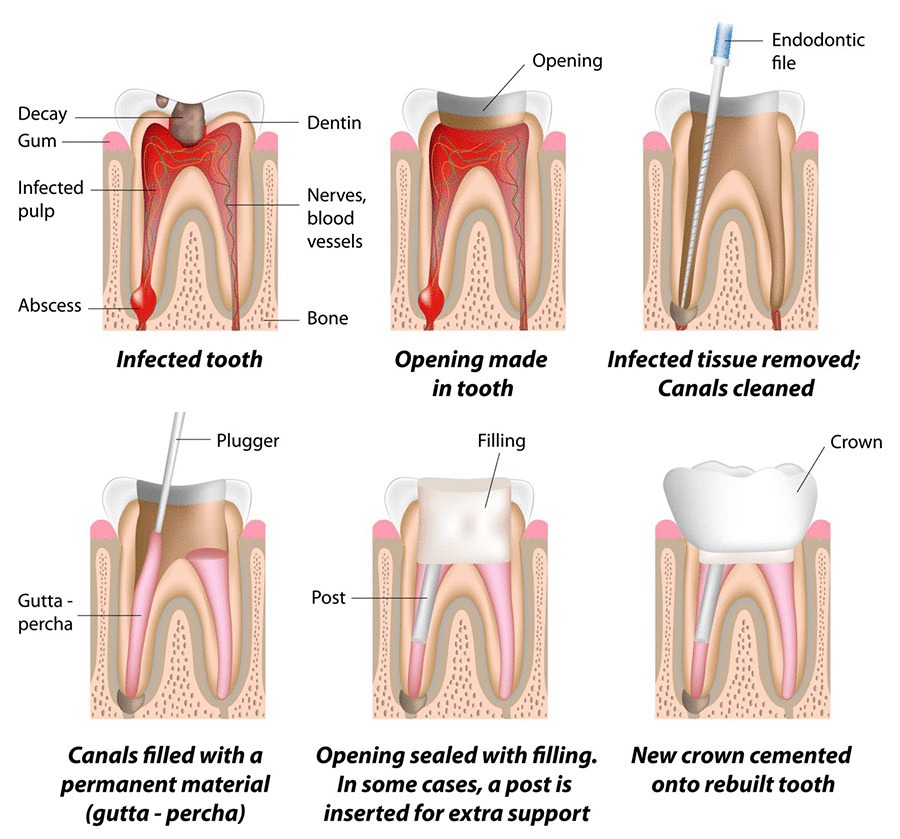
What Actually Happens During a Root Canal?
Fear often comes from not knowing the steps. Here’s a simple breakdown:
- Local anaesthesia — you should feel little to nothing.
- The infected nerve and pulp are removed.
- The inside of the tooth is cleaned, shaped and disinfected.
- The canal is filled and sealed.
- A crown is usually placed later to protect the tooth.
How Long Does It Take?
- Most routine root canals: 30–60 minutes.
- Usually completed in one visit or two visits max.
- Deeper infections may need an extra cleaning visit.
How Much Does It Hurt After Treatment?
Expect mild soreness or pressure for 1–2 days in many cases. Over-the-counter pain relief typically manages this, and most people return to work the same day or the next morning.
Final Thoughts
Root canal treatment is less painful, less time-consuming, and often less expensive than people imagine. It saves teeth and prevents bigger problems later. If you’re unsure whether you need an RCT, a quick consultation can clear doubts and potentially save a tooth you thought was lost.
If the pain question specifically is still on your mind, we've walked through the entire in-chair experience, sensation by sensation, in our companion piece on what a root canal actually feels like.