

"I spent an hour searching 'tooth pain at midnight India' before I found anything useful. I just needed someone to tell me what was actually urgent."
— exactly the gap this guide is meant to close
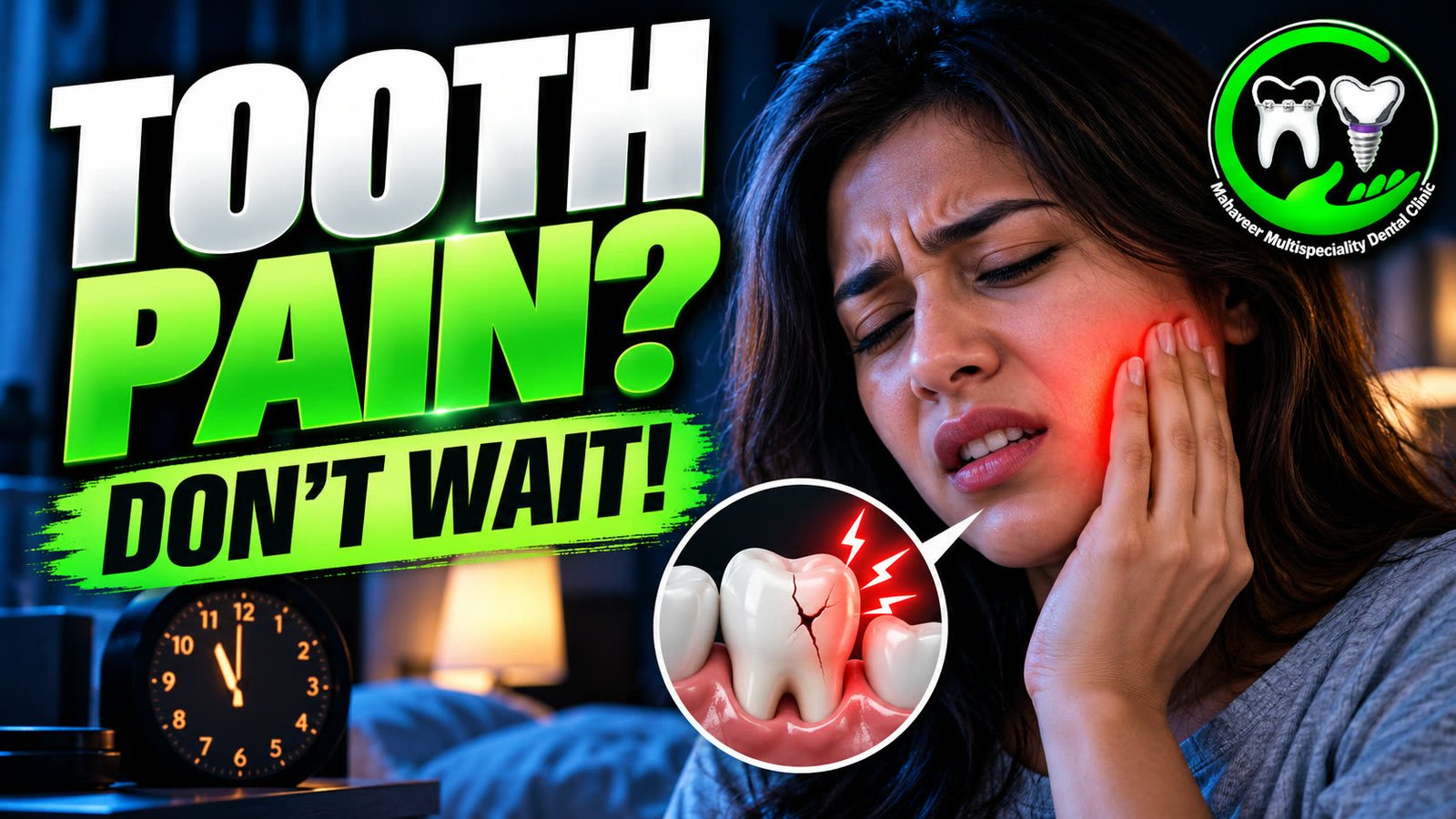
Dental pain has a reliably bad sense of timing. It rarely announces itself gently during clinic hours; it tends to arrive at night, on a weekend, or right before travel. The hardest part in that moment usually isn't the pain itself, it's not knowing whether this is a "manage it till morning" situation or a "go somewhere right now" one.
This is a practical, level-headed way to tell the difference, written the way we'd talk you through it over the phone at midnight, with the same honesty we bring to questions like whether a root canal can really wait a few days.
What Actually Counts as a Dental Emergency
Not every dental problem at night is an emergency, but a specific set of symptoms genuinely is, and recognising them quickly matters:
- Facial swelling that's visibly spreading, especially near the eye
- Difficulty breathing or swallowing
- A fever alongside tooth pain or swelling
- A tooth knocked out completely by trauma
- Bleeding from the mouth that won't stop with firm pressure
If what you're facing matches any of the first three, that's a signal to seek emergency medical care immediately, not wait for a dental clinic to open, since these can indicate an infection spreading beyond the tooth itself.
What Can Reasonably Wait Until Morning
"Can wait" means until your clinic opens, ideally the same day, not indefinitely. These situations are uncomfortable, not dangerous, and rushing to an emergency room for them usually just means a long wait for something a dentist can treat more directly.
Severe Toothache: Your Plan for Tonight
- Rinse with warm salt water. Helps clear any trapped food debris that could be contributing to the pain.
- Take standard pain relief as directed. Follow the packaging instructions; don't exceed the recommended dose out of desperation.
- Use a cold compress on the outside of the cheek. Helps numb the area and reduce any swelling.
- Avoid very hot, cold, or hard foods. Gives the area a chance to settle rather than being repeatedly aggravated.
- Sleep slightly propped up. Reduces blood flow to the head, which can ease nighttime throbbing.
If pain is severe enough that none of this helps even slightly, that's a reasonable trigger to call an emergency line or head to a hospital for pain control, with a dental follow-up as soon as a clinic opens. Many root canal situations begin exactly this way, which is part of why we've written separately about what root canal treatment actually feels like, since the fear of the fix often outweighs the fix itself.

Facial Swelling: Your Plan for Tonight
Swelling from a dental infection deserves a bit more caution than pain alone, because it's a sign the infection isn't staying contained to the tooth.
| What You're Seeing | What It Suggests | What to Do |
|---|---|---|
| Mild puffiness, no fever | Localised inflammation | Cold compress, see a dentist same day or next morning |
| Swelling spreading toward the eye | Infection tracking upward | Seek emergency medical care now |
| Swelling with fever | Possible systemic involvement | Emergency care, not a wait-and-see approach |
| Swelling affecting swallowing or breathing | Potentially serious airway risk | Emergency care immediately |
We've gone deeper into how an ignored infection reaches this point in our article on how oral infections can affect overall health, which is worth reading once the immediate situation is handled.
Broken or Knocked-Out Tooth: Your Plan for Tonight
A Tooth That's Chipped or Cracked
Rinse your mouth gently, save any broken piece if you can find it, and cover any sharp edge with sugar-free gum or dental wax if it's cutting your tongue or cheek. A protective crown is often the eventual fix, but that decision is made at the appointment, not at home.
A Tooth Knocked Out Completely
This is the one true time-sensitive dental emergency. Pick the tooth up by the crown, never the root, rinse it gently without scrubbing, and try to reinsert it into the socket facing the right way if possible. If that's not possible, keep it in a cup of milk and get to a dentist within 30 to 60 minutes; the odds of saving the tooth drop quickly after that window.
Mistakes People Make During a Dental Emergency
Preventing the Next Midnight Emergency
Most dental emergencies trace back to something that had been quietly building for a while, a cavity that went unchecked, a crack from grinding, or gum disease that had already progressed. Our guide on spotting early signs of a cavity and our piece on how often you really need a checkup are both aimed at reducing exactly this kind of 11 p.m. scramble in the first place.
According to India's Ministry of Health and Family Welfare, routine preventive checkups remain one of the most effective ways to avoid acute dental emergencies altogether, which lines up with what we consistently see in practice.
How Mahaveer Multispeciality Dental Clinic Can Help
Once the immediate situation is handled, here's where the next steps fit in:
| What You Need | How We Help | Explore |
|---|---|---|
| Urgent treatment for infected tooth pain | Prompt assessment and root canal treatment where needed | Root Canal Treatment |
| A broken or chipped tooth repaired | Crown or bridge options to restore shape and protection | Dental Crowns & Bridges |
| A tooth that cannot be saved | Safe, straightforward extraction when it's genuinely the right call | Tooth Extractions |
| Preventing the next emergency | Routine checkups to catch problems before they escalate | Preventive Dentistry |
| A nearby clinic in Goregaon | Prompt attention at our Goregaon West location | Dentist in Goregaon West |
| A nearby clinic in Thane | Prompt attention at our Thane West location | Dentist in Thane West |
Frequently Asked Questions
Final Thoughts
A dental emergency at night feels worse than it often is, mostly because you're dealing with it alone and unsure what's actually serious. Spreading swelling, fever, trouble breathing or a knocked-out tooth genuinely can't wait. Almost everything else can be managed calmly overnight and handled properly once a clinic opens.
Visit Mahaveer Multispeciality Dental Clinic
Mahaveer Multispeciality Dental Clinic
Shop No. 1, C.H.S.Ltd, Ashirwad, Road No. 2, Near Anand Hotel, Unnat Nagar No. 4, Motilal Nagar I, Goregaon West, Mumbai, Maharashtra 400062
Contact: +91 90572 02410
Mahaveer Multispeciality Dental Clinic
A-Wing, Shop No. 5, Green Wood Complex, Oxford Society, Thane West, Thane, Maharashtra 400610
Contact: +91 86919 01509