

"I kept waiting for it to hurt. It never did. The worst part was the week before, lying awake dreading it."
— something almost every patient tells us after their first root canal
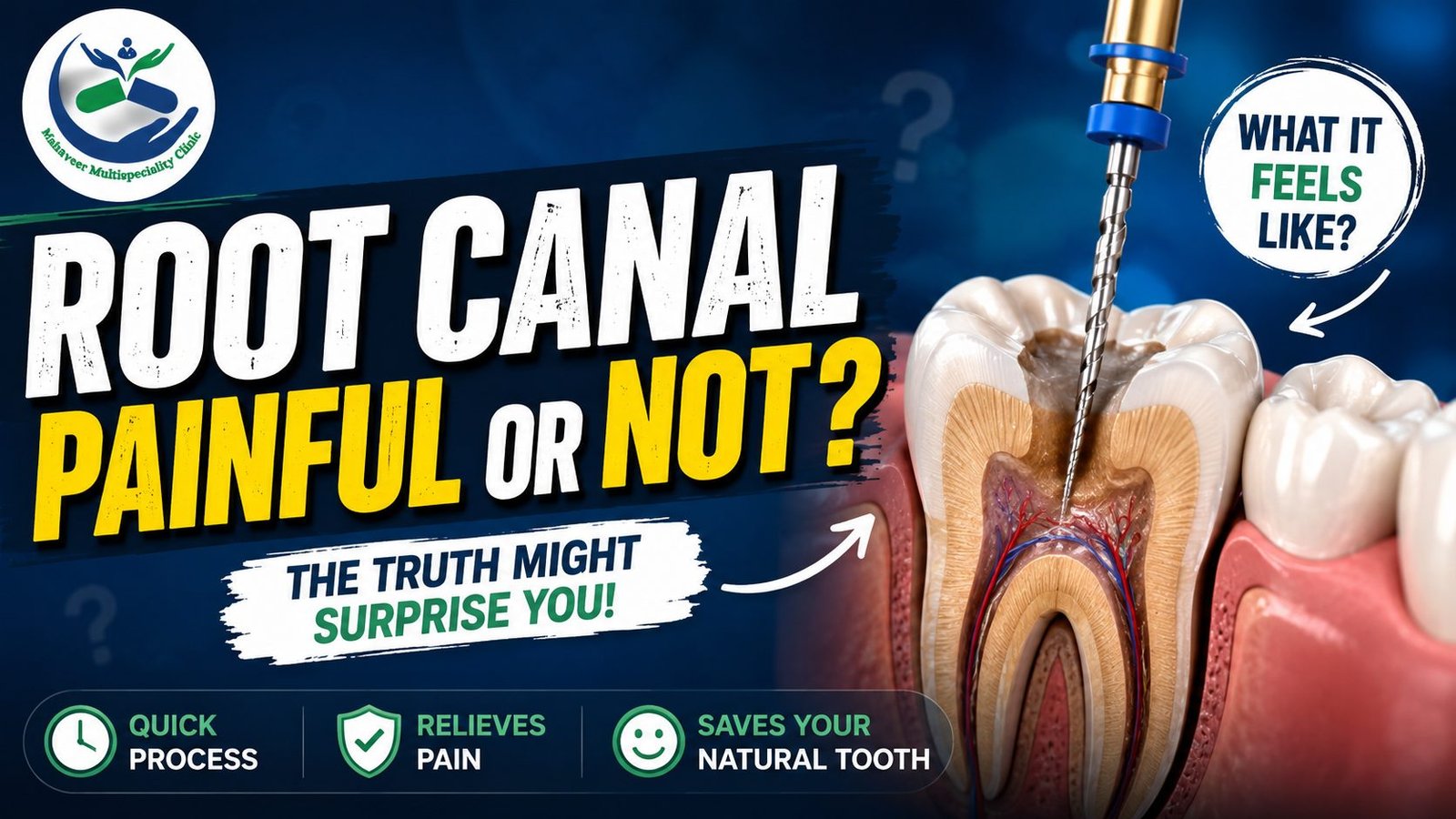
Nobody Googles "root canal" out of curiosity. You're here because a dentist just told you that you need one, and your brain filled in the rest with every horror story you've heard. So let's deal with that fear directly, sensation by sensation.
What follows is the same honest conversation we'd have with you in the chair: what you'll feel, when, and what genuinely isn't normal — the same approach we take when patients ask whether dental implants hurt. No scare tactics.
The Bad Reputation, Explained
"Root canal" has become shorthand for the worst thing imaginable, right up there with a trip to the tax office. That reputation didn't come from nowhere, but it also isn't true today.
Decades ago, anesthesia was less precise and a lot of people only saw a dentist once the infection was already severe, often missing the early signs of a cavity years before it ever got that far. What they remembered was the pain of the infection, not the treatment that relieved it, but that association stuck around far longer than the outdated methods that caused it.
Modern Dentistry Isn't the Dentistry Your Parents Remember
Digital anesthesia and rotary instruments have changed what this procedure actually feels like. The tools your dentist uses today simply didn't exist when most of those old horror stories were formed.
What a Root Canal Actually Feels Like, Step by Step
Here's the part nobody explains clearly: the sensations, in order, as they actually happen.
The Numbing Injection
This is the most uncomfortable moment of the whole appointment, and it's over in seconds: a brief pinch, then spreading numbness in your lip, cheek, and the tooth itself within minutes. Once it sets in, pain from that tooth is essentially switched off.
During the Procedure
What you'll notice now is pressure, not pain, as the dentist cleans out the infected tissue inside the tooth, similar to a routine dental filling but a bit longer. Some patients describe it as feeling like someone is "working" on the tooth without it hurting, which is about as accurate as it gets.
Right After You Leave
Numbness lingers two to four hours, so avoid hot drinks until it fully returns, mainly to avoid biting your own cheek by accident. Once it wears off, mild tenderness is common, but it's a manageable ache, not the sharp pain that brought you in.
Sounds, Pressure, and Sensations You Might Notice
Unfamiliar sounds and sensations feel alarming mostly because you don't know what they mean. Quick reference:
| What You Notice | Is It Normal? | What It Actually Means |
|---|---|---|
| A high-pitched drilling sound | Yes, expected | The instrument accessing the inside of the tooth; louder than it feels |
| Pressure or a pushing sensation | Yes, expected | Normal touch sensation; anesthesia blocks pain, not pressure |
| A faint metallic or bitter taste | Yes, expected | From irrigation solutions used to clean and disinfect the canal |
| Vibration in the jaw | Yes, expected | From rotary instruments cleaning the internal canal |
| Sharp, sudden pain | No, not expected | A sign anesthesia needs topping up; tell your dentist right away |
Knowing this in advance stops these sensations from feeling like warning signs, when they're really just the ordinary mechanics of a routine procedure.
Your Appointment, Start to Finish
Knowing the sequence in advance makes the whole thing feel far less like an unknown. Here's how a typical visit actually unfolds:
- Diagnosis and X-ray. Confirms the extent of infection and maps the tooth's internal canals.
- Numbing the area. Local anesthesia is applied and given a few minutes to fully take effect.
- Isolating the tooth. A small rubber sheet keeps the area dry during treatment.
- Cleaning the canal. Infected tissue is removed and the space disinfected.
- Sealing the tooth. The cleaned canal is filled with a biocompatible material.
- Temporary or permanent filling. Seals the opening; a crown usually follows.
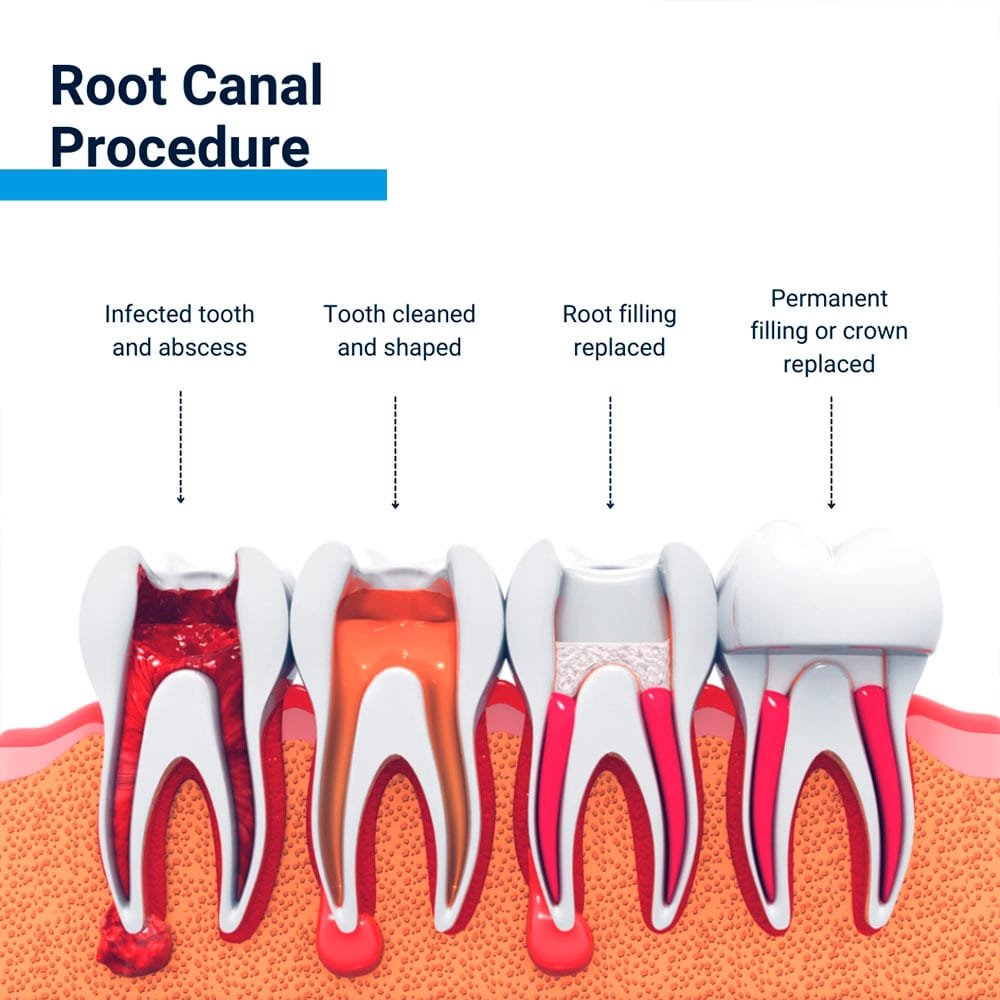
Most of this happens in a single sitting, though more complex cases with multiple canals occasionally need a second short visit.
One Visit or Two? What Decides That
Most straightforward root canals, especially front teeth with a single canal, finish in one sitting of 60 to 90 minutes. Molars have multiple canals, sometimes three or four, which naturally takes longer to clean thoroughly.
A second visit becomes necessary mainly when the infection is severe and the tooth needs a few days with a medicated dressing before the final seal, or when canal anatomy is more complex than the X-ray suggested. Neither means anything went wrong; it just means your dentist is prioritizing the kind of thorough, unhurried treatment that ICMR guidance associates with better long-term outcomes.
How This Compares to Other Dental Fears
If you've avoided the dentist's chair in general, it helps to place root canal treatment next to the other things people commonly dread.
Fear of the Needle
The injection is the same one used for a filling, a crown preparation, or a simple extraction, not a bigger needle because the procedure sounds serious. If needle anxiety is what's holding you back, numbing gel on the gum beforehand is a simple option worth asking for.
Fear of the Drill Sound
The sound is genuinely louder than the sensation. Because the tooth is numb, the vibration you feel is mild, even though the pitch can sound intense through bone conduction. Many patients simply bring earphones to manage this.
Fear of Losing Control in the Chair
This is less about pain and more about lying still with your mouth open for a while. Agreeing on a simple hand signal to pause, even just raising a hand, resolves this for most anxious patients within minutes. If dental anxiety has kept you away for years, mentioning it when you book a consultation lets your dentist plan the pacing around it from the start.
Recovery: What the First Few Days Actually Feel Like
According to India's National Health Portal, a treated tooth generally heals without complication once the infection source is fully removed, matching what we see in most of our own cases.
Why Saving the Tooth Beats the Alternative
Root canal treatment exists to avoid extraction, and keeping your natural tooth has benefits beyond just avoiding a gap:
Your Natural Bite Stays Intact
Chewing force and jaw alignment work the way they were designed to.
Neighboring Teeth Don't Shift
Extraction leaves a gap that nearby teeth gradually drift into.
Speech and Appearance Are Unaffected
A treated, crowned tooth looks and functions like any other tooth in your mouth.
It's Usually the Cheaper Long-Term Path
Extraction often leads to a bridge or implant later, costing more than treatment now.
We've laid out the actual rupee figures and appointment timeline separately in our guide on root canal cost and timelines, if that's the piece of the decision you're weighing right now.
Hear It From a Patient
A real patient describing their root canal experience at Mahaveer Multispeciality Dental Clinic, in their own words.
Mistakes That Make the Experience Worse Than It Needs to Be
Who Should Be a Little More Cautious
Case complexity also matters. A severely infected tooth, unusually narrow canals, or a previous root canal that needs redoing can extend the appointment and occasionally need a specialist referral, worth flagging before treatment begins.
Patients managing diabetes or a compromised immune system also fall into this category, not because the procedure changes, but because healing can take a little longer, a link India's National Health Portal notes when it comes to diabetes and wound recovery generally. Mentioning any existing conditions during your consultation helps your dentist plan accordingly.
A Word on Root Canal Myths
Pain is only one misconception people carry into this decision. If you've also heard that root canals cause illness elsewhere in the body, weaken the tooth permanently, or take multiple lengthy visits regardless, we've addressed those in detail in our piece on common root canal myths and facts.
Worth flagging briefly: an untreated infected tooth doesn't just risk the tooth itself. Left unaddressed, oral infections can affect surrounding gum tissue and, in serious cases, wider health concerns, a connection India's Ministry of Health and Family Welfare flags as part of public oral health awareness. We go deeper into this in our article on oral health and your overall health.
How This Usually Starts: Ignored Tooth Decay
Most root canals aren't random. They're the end point of a cavity that went unnoticed for months, sometimes longer. Everyday habits, from sugary snacking to acidic drinks, play a bigger role than most people realize, something we unpack in our guide to how everyday Indian diets affect tooth decay. Catching a cavity early remains the single most effective way to avoid this conversation altogether.
Regular checkups catch these problems while they're still small and inexpensive to fix. If it's been a while, our guide on how often you actually need to see a dentist is a useful starting point.
How Mahaveer Multispeciality Dental Clinic Can Help
Whatever stage you're at, here's where each part of that journey fits into what we offer:
| What You Need | How We Help | Explore |
|---|---|---|
| A root canal diagnosis and treatment | Digital X-ray assessment, gentle anesthesia, and complete root canal treatment in one clinic | Root Canal Treatment |
| Protection for the treated tooth | Custom crown fitting after treatment to prevent future cracking or damage | Dental Crowns & Bridges |
| An honest second opinion on extraction vs. treatment | A straightforward consultation comparing both paths for your specific case | Tooth Extractions |
| Preventing the next cavity from reaching this point | Routine cleanings and early cavity detection before it becomes a bigger procedure | Preventive Dentistry |
| A nearby clinic in Thane | Full root canal care at our Thane West location | Dentist in Thane West |
| A nearby clinic in Goregaon | Full root canal care at our Goregaon West location | Dentist in Goregaon West |
Frequently Asked Questions
Final Thoughts
The gap between what people expect a root canal to feel like and what it actually feels like is one of the widest in dentistry, and almost entirely in your favor. The anesthesia works, the pressure is manageable, and the appointment is usually shorter than the anxious wait beforehand.
If a toothache has been building and you've been avoiding a proper look, that assumption is likely the only thing standing between you and relief. Our patient appreciation stories or frequently asked questions are a good next step for more reassurance before booking.
Visit Mahaveer Multispeciality Dental Clinic
Mahaveer Multispeciality Dental Clinic
Shop No 1, Ashirwad, C.H.S. Ltd
Near Anand Hotel, Motilal Nagar II, Goregaon West, Mumbai, Maharashtra 400062
Contact: +91 90572 02410
Mahaveer Multispeciality Dental Clinic
Shop No. 5, Green Wood Complex, Oxford Society, A Wing, Manpada, Thane West, Thane, Maharashtra 400610
Contact: +91 86919 01509