

Nobody skips the dentist because their gums bleed. They skip it because they have decided, quietly, that bleeding gums are normal.
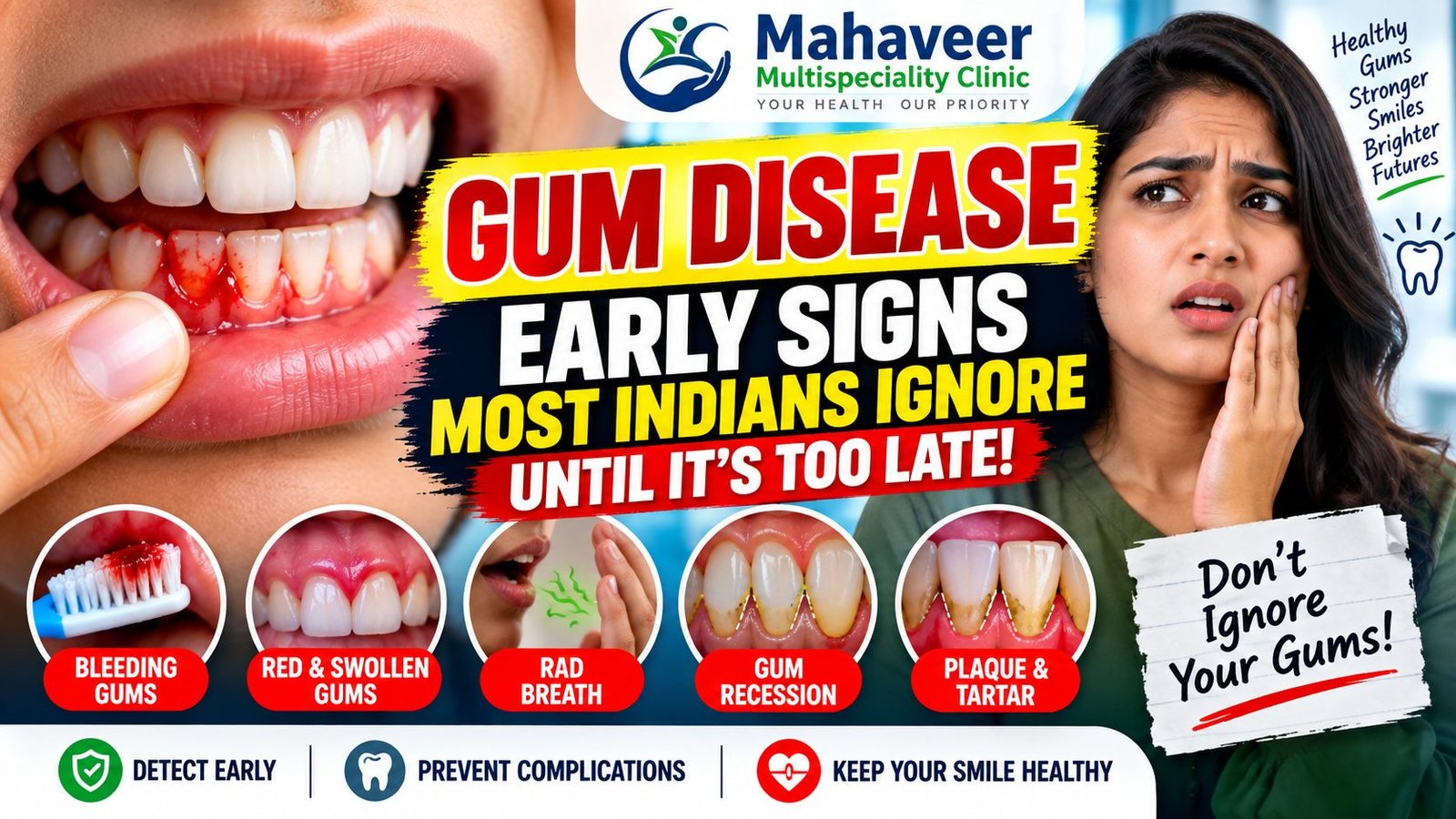
Ask ten people whether their gums have ever bled while brushing and most will say yes without a second thought. Ask how many mentioned it to a dentist and the room goes quiet. Gum disease hides in plain sight: it rarely hurts, it builds slowly, and every early sign comes with a perfectly reasonable excuse.
That is exactly why it catches people off guard, and why WHO's oral health report treats oral disease as a public health concern rather than a cosmetic one. Real pain shows up late, usually after the bone around a tooth has already started to give way. This guide walks through what the early signs look like, what sits behind them, what treatment involves, and what you can do at home so things never get that far. Nothing here is meant to frighten you. Most of it is very fixable if you act early.
Why Gum Disease Goes Unnoticed for Years
Teeth have nerves that complain loudly the moment something is wrong. Gums are far quieter. Early inflammation produces no ache, no swelling you can point to, nothing that interrupts your day. A bit of pink in the sink is easy to wave away.
There is also a cultural habit at play. Many of us grew up watching parents and grandparents lose teeth in their fifties and assumed it came with age. It does not. Age does not loosen teeth; untreated gum disease does. Cavities at least give you a hole to see or a zing of sensitivity, which is why most people learn to spot early cavity signs faster than gum trouble.
Gingivitis vs Periodontitis: Where the Line Falls
Gum disease is not one condition but a slope, and where you are on that slope decides how easy the fix is.
Gingivitis: the reversible stage
Plaque, the sticky film of bacteria that forms on teeth every day, irritates the edge of the gum. The gum turns red, puffy and bleeds easily. The bone and the fibres holding the tooth are still intact, so once the plaque and hardened tartar are cleaned away and daily cleaning improves, the gums usually return to normal.
Periodontitis: when the damage goes deeper
If the inflammation is left alone, it can spread below the gumline. The gum starts to pull away from the tooth, forming pockets where bacteria sit out of reach of a toothbrush. Over time the body's own response to that infection breaks down the supporting bone. This stage can be controlled but not reversed. The WHO estimates that severe periodontal disease affects more than a billion cases worldwide, so this is not a rare problem.
Nobody wakes up with periodontitis. It is the result of gingivitis that nobody noticed or nobody treated, which is the whole argument for paying attention early.
Eight Early Signs Most People Explain Away
Bleeding when you brush or floss
Healthy gums do not bleed under normal cleaning. Blood is the gum telling you it is inflamed.
Red, shiny or puffy gums
Healthy gum colour varies from person to person, but firm and even is the goal. A sudden change matters more than the shade.
Bad breath that keeps coming back
Bacteria under the gumline produce the smell. Mints and mouthwash hide it for an hour, then it returns.
Gums pulling back
Teeth start to look longer, or you notice sensitivity near the neck of the tooth where the root is now exposed.
A lingering bad taste
A metallic or sour taste that does not go away after brushing can come from infection around the gums.
Tender or sore gums
Gums that feel sore when you press them or chew hard food are not simply "sensitive".
Shifting teeth or new gaps
When bone support weakens, teeth can drift. Your bite may feel different or gaps may appear that were not there before.
Loose teeth or pus
These are late signs. They need prompt attention rather than a wait-and-see approach.
One sign on its own can mean very little. Two or more, or any single one that lasts beyond a couple of weeks, deserves a proper look. Spotting these changes early is the whole point of preventive care, which is less glamorous than any procedure and considerably cheaper.
The "Blood While Brushing Is Normal" Myth and Others
It is common, which is not the same as normal. Healthy gums do not bleed with gentle brushing.
Scaling removes tartar. It does not remove healthy tooth. The looseness some people feel afterwards is often the gaps that hardened tartar was quietly filling.
Hard brushing does not remove plaque any better, and it can push gums back and wear the root surface.
The scaling myth does the most damage in practice. Plenty of people avoid a cleaning because a relative told them their teeth felt loose afterwards, then live with tartar for years. The tartar was never protecting anything. Removing it lets the gum heal and tighten around the tooth.
What Actually Causes It, Beyond "Poor Brushing"
Plaque is the trigger, but plenty of people who brush twice a day still develop gum disease, because plaque is only part of the story. Several other things tip the balance.
Tobacco in every form
The NIDCR calls smoking and tobacco use the most significant risk factor for gum disease. In India that includes chewing tobacco in its many forms, from gutka and khaini to paan with tobacco. Tobacco irritates the gums directly and also masks the bleeding, so the early warning sign disappears while the damage continues.
Things you cannot easily see
Diabetes, hormonal shifts during pregnancy or menopause, dry mouth from certain medicines, stress, and family history all raise risk. Crowded or overlapping teeth are harder to clean, which is one reason some adults choose to straighten them with clear aligners once their gums are healthy.
Your Gums and the Rest of Your Body
Gum disease is an infection and an inflammation, and the body does not compartmentalise. The clearest link is with diabetes. WHO notes that the two influence each other in both directions: uncontrolled blood sugar makes gum disease worse, and active gum infection makes blood sugar harder to manage.
Researchers have also studied associations between gum disease and heart conditions, and in pregnancy outcomes. Cause and effect are still being debated, so it would be wrong to say that bleeding gums will give you a heart problem. What is safe to say is that a healthy mouth makes a healthy body easier. We look at this bigger picture in our piece on the mouth-body connection.
What Happens at the Dentist, Step by Step
Fear of the unknown keeps many people away. Here is what a typical gum-focused visit actually looks like, so there are no surprises.

Gum examination and pocket measurement
A small blunt probe measures the gap between gum and tooth. Healthy gums have shallow, tight spaces. Deeper pockets point to disease. This is usually painless.
X-rays where needed
Dental X-rays show how much bone is supporting each tooth, which tells us whether we are dealing with gingivitis or something deeper.
Professional scaling
Ultrasonic and hand instruments remove plaque and tartar from above and below the gumline. This is the step that lets inflamed gums heal.
Polishing and a home-care plan
Teeth are polished smooth so plaque sticks less easily. You are shown the brushing and cleaning method that suits your mouth.
Review and recheck
A few weeks later the gums are measured again. If pockets have closed, you move to a regular maintenance schedule. If some remain deep, further treatment is planned.
If a scaling visit still makes you nervous, it can help to read how other people found theirs in our patient stories.
Can Gum Disease Be Reversed? An Honest Answer
It depends on the stage. Gingivitis is reversible. With professional cleaning and better daily habits, gums typically return to a healthy, non-bleeding state within a few weeks.
Periodontitis is different. Bone that has been lost does not grow back on its own, so the goal shifts from cure to control: stopping the infection, keeping pockets clean and holding the remaining support steady for years. People with a history of gum trouble usually do best on a shorter recall than the standard six months, and our guide to the right checkup rhythm explains how that gets decided.
Home Care That Actually Moves the Needle
What you do in the ninety seconds after breakfast and before bed matters more than any single visit. The essentials are simple.

Use a soft brush, angled toward the gumline, with gentle short strokes for two minutes, twice a day. Clean between your teeth once a day with floss or small interdental brushes, since a toothbrush cannot reach those surfaces. Brush your tongue too. The ADA's MouthHealthy site has short how-to guides if you want a refresher on technique.
Food plays a supporting role too. Sipping sugary chai all day feeds the same bacteria that inflame your gums, and we cover this in more detail in our look at everyday diet habits.
Mistakes That Quietly Make Gums Worse
None of these mistakes come from carelessness. They come from good intentions and bad information. Someone who stops brushing where it bleeds is trying to be gentle. Someone who reaches for a stronger mouthwash is trying to be thorough. That is why a short conversation at a checkup, where someone watches how you actually brush, tends to fix more than any leaflet.
When Waiting Costs You Teeth
The advanced stage is where gum disease becomes expensive, in money and in comfort. Teeth loosen, gums recede, abscesses can form, and some teeth cannot be saved. Replacing them is possible, whether with crowns and bridges or other options, but replacement is always more involved than prevention.
There is a cosmetic side too. Receding gums and uneven gum lines change how a smile looks, and once the gums are healthy there are realistic ways to improve them. Some are simple and some are more involved, and the right choice depends on how much gum was lost and why. The sensible order is health first and appearance second, which we discuss in our guide to cosmetic dentistry in Mumbai.
How Mahaveer Multispeciality Dental Clinic Can Help
Wherever you are on the gum health slope, here is how each need maps to what we offer:
| What You Need | How We Help | Explore |
|---|---|---|
| A proper cleaning and gum check | Professional scaling, polishing and a home-care plan tailored to your gums | Dental Cleaning |
| Teeth lost to advanced gum disease | Long-term replacement once gums are healthy and stable | Dental Implants |
| Crowded teeth that trap plaque | Straightening that makes cleaning easier and gums healthier | Braces Treatment |
| A tooth too damaged to save | Gentle removal with a plan for what comes next | Tooth Extractions |
| A smile refresh after gum treatment | Planning that considers gum line, shape and colour together | Smile Designing |
Frequently Asked Questions
Final Thoughts
Gum disease is one of the few serious health problems where the warning signs are obvious, the early treatment is simple, and the cost of ignoring it is entirely avoidable. A little blood in the sink is information, not an inconvenience. If it has been more than a year since anyone properly measured your gums, that is the place to start.
If you would like more reassurance before booking, our FAQ page answers the questions we hear most.
Visit Mahaveer Multispeciality Dental Clinic
Mahaveer Multispeciality Dental Clinic
Shop No 1, Ashirwad, C.H.S. Ltd
Near Anand Hotel, Motilal Nagar II, Goregaon West, Mumbai, Maharashtra 400062
Contact: +91 90572 02410
Mahaveer Multispeciality Dental Clinic
Shop No. 5, Green Wood Complex, Oxford Society, A Wing, Manpada, Thane West, Thane, Maharashtra 400610
Contact: +91 86919 01509