

A good cosmetic result is not the one that looks most different. It is the one that looks like you, on a good day, and is still healthy in ten years.
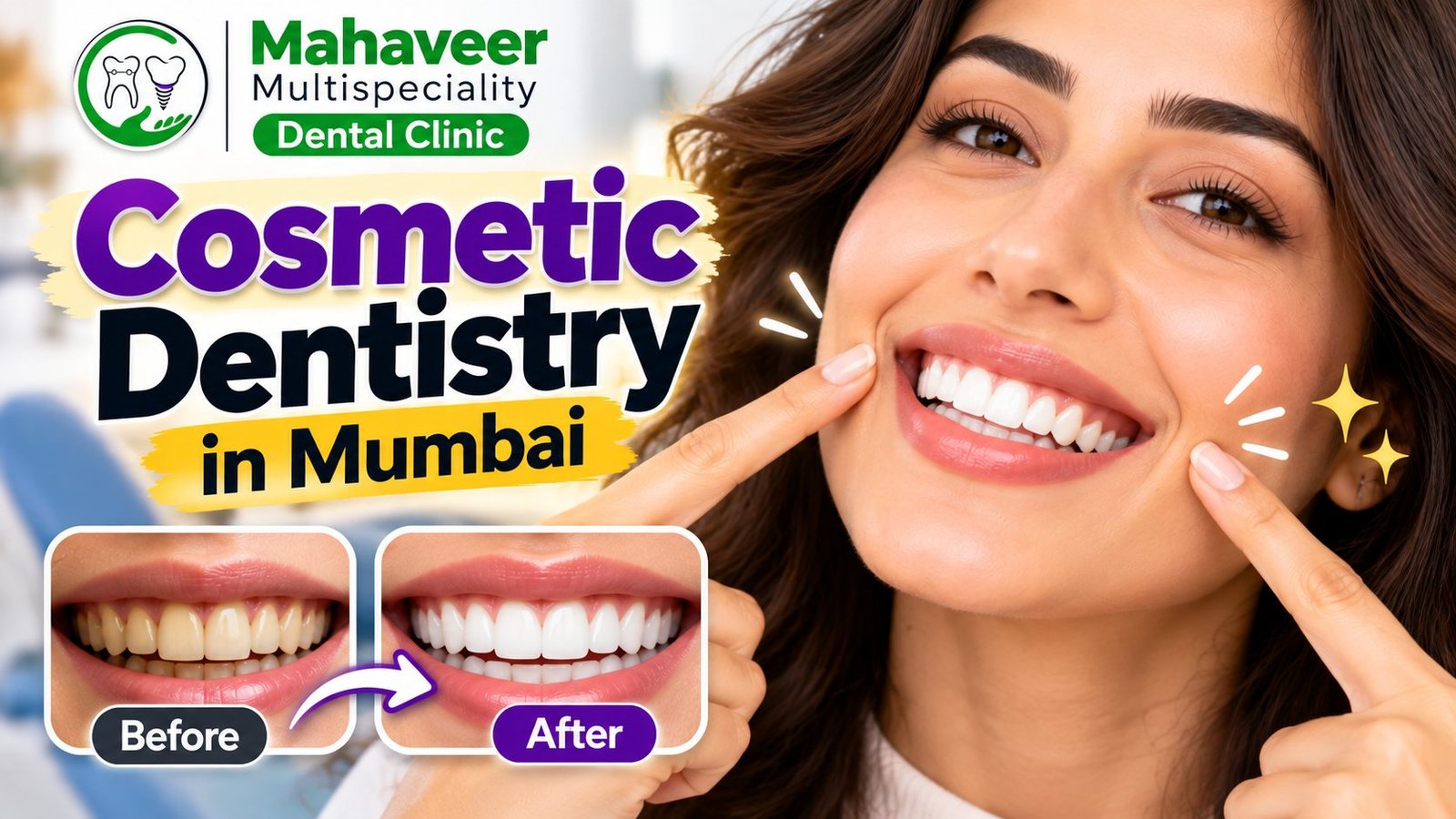
Walk past any dental clinic in Mumbai and you will see the same promise: a new smile in a day. Scroll through Instagram and it gets louder, with before-and-after reels, celebrity smiles and packages priced like a phone. It is genuinely hard to tell which treatments are well proven and which are mostly marketing.
This guide sorts that out. We will go through what really works in 2026, what tends to disappoint, how to choose between whitening, bonding, veneers and straightening, and the questions that protect you from expensive regret. No hype, and no assumption that everyone needs everything.
What Cosmetic Dentistry Actually Means in 2026
Cosmetic dentistry is any treatment whose main goal is to change how teeth look: their colour, shape, size, spacing or alignment. In practice it overlaps heavily with restorative dentistry, because a crown that fixes a broken tooth also decides how that tooth looks.
What has genuinely changed in recent years is planning. Digital photos and scans let you see a proposed result before any tooth is touched, materials look far more natural than they used to, and clear aligners have made straightening more acceptable to adults. Our overview of a smile makeover shows how these pieces fit together. The technology helps, but it does not replace judgement. The best results still come from doing less, in the right order.
Start With Your Concern, Not the Procedure
Most people walk in asking for a treatment by name: veneers, whitening, a Hollywood smile. A better starting point is to say what bothers you. The concern usually points to the right answer, and sometimes to a much simpler one than you expected.
| Your Concern | What Usually Works | Be Cautious About |
|---|---|---|
| Yellow or stained teeth | Professional whitening | Charcoal powders, lemon and other DIY hacks |
| A small chip or narrow gap | Bonding, sometimes veneers | Over-treating a very minor flaw |
| Uneven shape or size | Bonding or veneers, planned with a smile design | Shaving healthy teeth for a small change |
| Crooked or crowded teeth | Braces or clear aligners | Using veneers to disguise real crowding |
| Worn, broken or heavily filled tooth | A crown or a well-made filling | Cosmetic cover-ups over decay |
| Gummy smile or uneven gums | A proper assessment before any decision | Assuming the teeth are the only problem |

Teeth Whitening: What Works and What Doesn't
Professional whitening
Whitening uses hydrogen peroxide or carbamide peroxide to lighten stains. In a dental setting the gums are protected with a gel or shield, the strength is controlled, and your teeth are checked first for cavities and gum problems that would make whitening uncomfortable. The result is a lighter shade, not a permanent one. Tea, coffee and tobacco will bring the colour back over time. Sensitivity is the most common side effect. It usually settles within a day or two, and your dentist can suggest a desensitising toothpaste or adjust the plan if it bothers you.
One point surprises many people. Whitening does not work on every kind of discolouration. The ADA's consumer guide says as much, and advises talking to a dentist first. Stains from certain medicines, or a tooth darkened by injury, may need a different approach altogether.
Home hacks and whitening toothpastes
Charcoal powders, lemon juice and baking soda scrub are popular, and they are exactly the wrong way to go. Abrasives and acids wear away enamel, which is what makes teeth look yellow underneath in the first place. Whitening toothpastes remove surface stains only, and they will not change the natural shade of the tooth. Our comparison of professional and at-home whitening goes through what to expect from each.
Veneers: Beautiful, But Not Casual
Veneers are thin shells bonded to the front of a tooth to change its colour, shape or size. They can transform a smile, which is precisely why they are over-sold. Understand the two main kinds before you agree to anything.
Composite and porcelain
Composite veneers are built directly onto the tooth with tooth-coloured resin, often in one or two visits and with little or no shaping. They cost less and can be repaired, but they stain and wear sooner. Porcelain veneers are made in a dental laboratory, resist staining better and tend to last longer, but they usually need a thin layer of enamel removed, and dental veneers of that kind cannot be undone.
What to ask before you commit
Ask how much enamel will be removed, whether you will see a mock-up first, which laboratory makes them, and what happens if one chips. Those four questions will tell you a great deal about how the clinic works. If the answers are vague or rushed, that is your answer too.
Dental Bonding: The Underrated Fix
Bonding is the quiet workhorse of cosmetic dentistry. A tooth-coloured resin is shaped directly onto the tooth to close a small gap, repair a chip or adjust a tooth's shape. It is the same family of material used in tooth-coloured fillings, so it is well understood.
It is usually done in a single visit, often without any anaesthetic, and it removes little or no natural tooth. The trade-off is durability. Bonded resin can stain or chip over the years, but it can also be polished or repaired easily. For small changes it is often the smartest first move. Because the resin is shaped by hand, the result depends heavily on the skill of the person doing it, so ask to see examples of their bonding work and not only their veneers.
Straightening Is Cosmetic Dentistry Too
If the real issue is crowding or crooked teeth, the honest answer is often braces or clear aligners, not veneers. Moving teeth into place keeps your natural enamel intact, improves your bite and makes cleaning easier. Veneers used to hide crowding can mean removing far more tooth than a small cosmetic gain justifies.
Adults sometimes hesitate because of the time involved. It helps to know the range, and our guide to the braces timeline gives realistic ranges for teens and adults. Straightening first and then, if still wanted, adding whitening or bonding is often the order that gives the best result with the least compromise. Clear aligners are removable, which makes eating and cleaning easy, but they only work if you wear them for the hours you have been advised.
Smile Designing: Planning Before Anything Is Drilled
Smile designing is not a single procedure. It is a planning process that considers your teeth, gums, lips, face and bite together, then puts a sequence of treatments in the right order.

Consultation and goals
You describe what bothers you and what you would like to change. A good dentist listens first and sometimes talks you out of the treatment you came in for.
Examination, photos and scans
Teeth, gums and bite are checked, and photographs or scans are taken. Problems such as cavities or gum inflammation are dealt with before anything cosmetic.
A preview of the result
A mock-up or digital preview lets you see the proposed change and give feedback while nothing is permanent.
Treatment in the right order
Gum health, straightening, whitening and restorations are sequenced so that each step supports the next.
Final result and maintenance
The finished work is checked for comfort and bite, and you leave with a clear home-care and review plan.
The mock-up step deserves special mention. Seeing a temporary version of the new smile in your own mouth lets you judge how it looks when you talk and laugh, not just in a photo. It is also your chance to say 'a bit less', which may be the most useful sentence in cosmetic dentistry. Reading how other people described their own experience in our patient stories can help you know what to ask.
Why Gum and Tooth Health Come First
No cosmetic treatment sits well on unhealthy foundations. Veneers or crowns placed over inflamed gums can look uneven and make bleeding worse, and whitening on teeth with untreated cavities can be painful. A responsible clinic will insist on dealing with these first, even if it delays the exciting part.
If your gums bleed when you brush, our guide to gum disease signs is worth reading before you plan anything cosmetic. It is not the glamorous answer, but it is the one that protects your investment.
Red Flags: Promises Worth Pausing Over
It is entirely reasonable to ask about a dentist's qualifications and training. Professional bodies such as the Indian Dental Association are a useful place to read about standards of practice. You are not being difficult by asking. You are protecting teeth that will not grow back.
How Long Results Last, and What They Cost
| Treatment | What Affects Longevity | Maintenance |
|---|---|---|
| Professional whitening | Tea, coffee and tobacco fade the result gradually | Occasional touch-ups and regular cleaning |
| Bonding | Can stain or chip with wear over the years | Polishing and easy repairs |
| Composite veneers | Wear and staining come sooner than with porcelain | Periodic polishing or repair |
| Porcelain veneers | Bite, grinding habits and the quality of lab work | Careful cleaning and regular checkups |
| Braces or aligners | Whether retainers are worn afterwards | Retainers as advised |
Every one of these does better with a regular routine. That means daily cleaning, a night guard if you grind your teeth, and a sensible checkup routine.
A night guard deserves a special mention. If you clench or grind, especially in your sleep, the forces on veneers and bonding are far higher than in normal chewing, and a thin custom guard is a cheap way to protect an expensive result.
On cost, honest numbers depend on the materials, the laboratory, how many teeth are involved and how complex the case is. Be wary of any figure quoted without an examination. Ask for an itemised plan, and remember that treatment does not have to be expensive to be excellent. We explain how that works in our piece on affordable dental care. Ask also what is included: follow-up visits, adjustments, a night guard, and what happens if something needs repair in the first year. Two quotes that look different may cover very different things.
Who Should Wait, and Who Should Think Twice
Cosmetic work is elective, which means it can wait. It is best postponed if you have active decay or gum disease, if you grind your teeth heavily and have not yet been fitted with a guard, or if your expectations are for a result that no material can deliver. Many dentists also prefer to postpone elective whitening during pregnancy as a precaution.
If crooked teeth are the real issue, the cost of braces and how long they take are worth understanding before you commit to veneers. The goal is a smile you would still choose after knowing all the options. Younger patients are a special case too. Teeth and gums are still maturing, so many dentists favour conservative, reversible options until things settle.
How Mahaveer Multispeciality Dental Clinic Can Help
Whatever you would like to change, here is how each need maps to what we offer:
| What You Need | How We Help | Explore |
|---|---|---|
| Brighter, less stained teeth | Supervised whitening with gum protection and clear expectations | Teeth Whitening |
| A change in shape, size or colour | Custom-made veneers, planned and previewed before treatment | Veneers |
| A complete, planned smile makeover | Sequenced planning that considers teeth, gums and bite together | Smile Designing |
| Straighter teeth without metal braces | Clear aligner treatment planned around your goals | Invisalign |
| A broken or heavily worn tooth | Crowns and bridges that restore strength and appearance | Crowns and Bridges |
Frequently Asked Questions
Final Thoughts
The treatments that work best in cosmetic dentistry are rarely the flashiest. Start with healthy gums and teeth, choose the least invasive option that solves your actual concern, and insist on seeing the plan before any tooth is touched. A smile you are comfortable with for years beats a dramatic one you regret.
If you would like more reassurance before booking, our FAQ page answers the questions we hear most.
Visit Mahaveer Multispeciality Dental Clinic
Mahaveer Multispeciality Dental Clinic
Shop No 1, Ashirwad, C.H.S. Ltd
Near Anand Hotel, Motilal Nagar II, Goregaon West, Mumbai, Maharashtra 400062
Contact: +91 90572 02410
Mahaveer Multispeciality Dental Clinic
Shop No. 5, Green Wood Complex, Oxford Society, A Wing, Manpada, Thane West, Thane, Maharashtra 400610
Contact: +91 86919 01509